
What Are the Top 5 Benefits of Owning an Electric Vehicle?
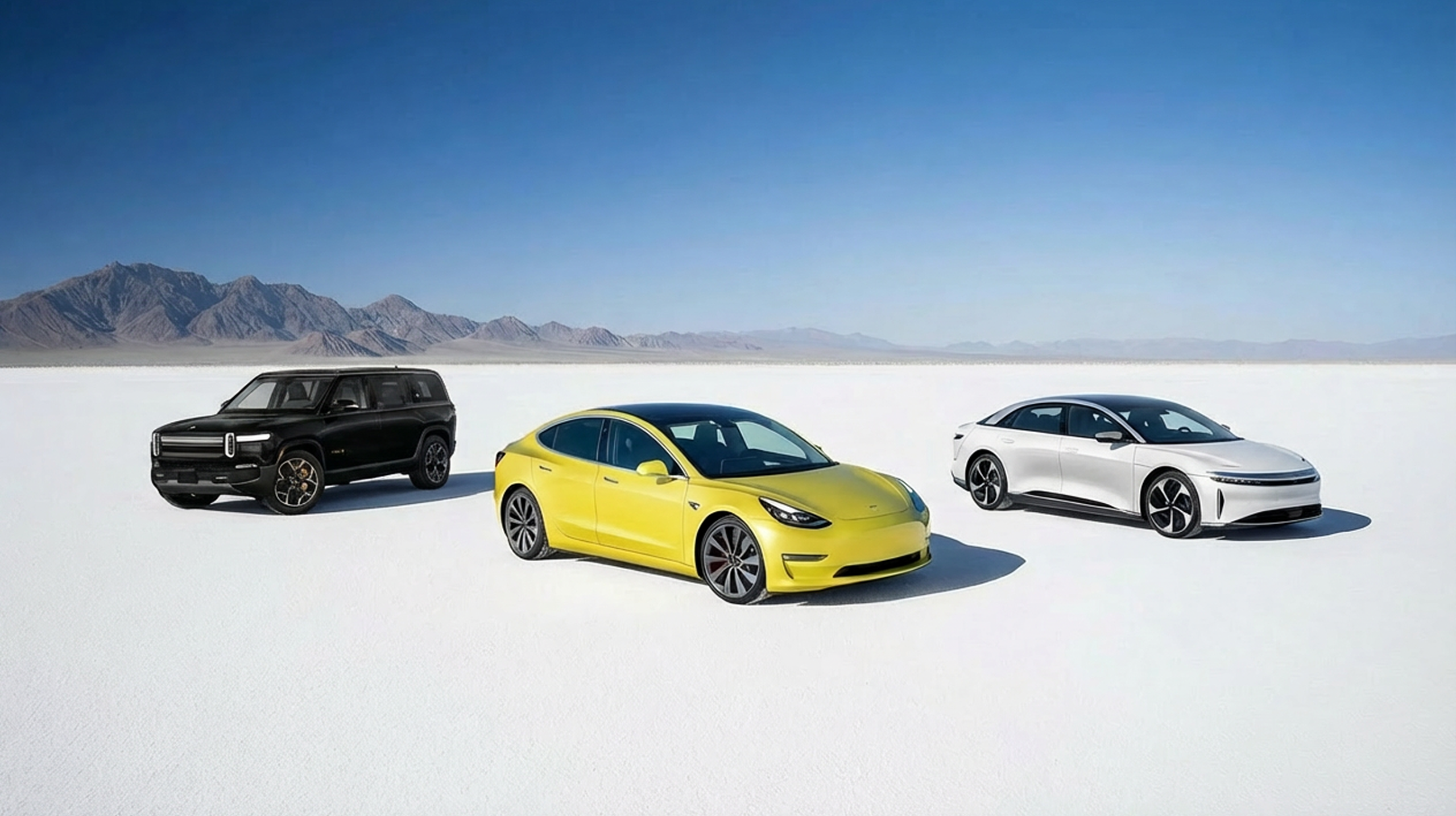
Electric vehicles offer five standout benefits: lower maintenance costs, lower fueling costs, at-home charging convenience, advanced safety and technology, and an engaging driving experience built around instant torque. For drivers with reliable charging and a routine that matches the vehicle’s range, those advantages can save time and money. The right choice, however, still depends on climate, parking, trip patterns, and budget.
This guide focuses primarily on battery-electric vehicles, or BEVs, which run entirely on electricity. Plug-in hybrids can deliver some of the same benefits, but they still have a gasoline engine and its related maintenance. Because costs, range, charging speed, and features vary by model and configuration, compare individual vehicles rather than treating every EV alike.
Table of Contents
The Five EV Benefits at a Glance
|
Benefit |
Why it matters |
What to verify |
|---|---|---|
|
Lower maintenance |
No engine oil changes and fewer powertrain service items |
Tire, coolant, brake-fluid, and inspection schedules |
|
Lower fueling costs |
Home electricity can cost less per mile than gasoline |
Utility rate, vehicle efficiency, and public-charging prices |
|
Daily convenience |
Charging where you park can replace routine gas-station visits |
Parking access, electrical capacity, and charging time |
|
Safety and technology |
Many EVs offer cameras, driver assistance, connected controls, and software updates |
Exact trim equipment, crash-test results, and feature limitations |
|
Driving enjoyment |
Immediate motor response creates smooth, quick acceleration |
Power output, tires, drivetrain, range, and weather capability |
1. Lower Maintenance Costs
A BEV does not need engine-oil changes, spark plugs, exhaust-system repairs, or maintenance for a conventional multispeed engine transmission. Its electric propulsion system generally has fewer moving parts than an internal-combustion powertrain. The U.S. Department of Energy’s electric-vehicle maintenance guidance identifies reduced maintenance as a core EV advantage.
Regenerative braking can also reduce wear on friction brakes. When the driver lifts off the accelerator or presses the brake pedal, the motor can slow the vehicle while returning energy to the battery. How aggressively this happens depends on the vehicle and selected drive mode.
Lower maintenance does not mean no maintenance. EV owners should still budget for:
-
Tire rotations, replacement, alignment, and pressure checks
-
Cabin air filters and windshield-washer fluid
-
Brake inspections and brake-fluid service
-
Battery or power-electronics coolant where specified
-
Wiper blades, suspension components, and air-conditioning service
-
Manufacturer-required inspections and software campaigns
Important: An EV’s weight and immediate torque can contribute to tire wear, particularly with aggressive acceleration. Follow the exact maintenance schedule in the owner’s manual, because requirements differ by model year and vehicle.
2. Lower Fueling Costs
Electricity often costs less per mile than gasoline, especially when charging at home and replacing a less-efficient gas vehicle. Drivers with workplace, hotel, or community charging included at no additional cost may save more. Public DC fast charging, however, can be substantially more expensive than home charging, and some networks add session or idle fees.
Use these formulas to compare vehicles with your own rates:
-
EV cost per mile: electricity price per kilowatt-hour ÷ miles driven per kilowatt-hour
-
Gas cost per mile: gasoline price per gallon ÷ miles per gallon
An Illustrative Annual-Cost Comparison
|
Vehicle |
Assumptions |
Estimated annual energy cost |
|---|---|---|
|
Electric vehicle |
12,000 miles, 3 miles/kWh, $0.15/kWh |
$600 before charging losses or fees |
|
Gas vehicle |
12,000 miles, 30 mpg, $3.50/gallon |
$1,400 |
Under those assumptions, the EV saves about $800 per year in energy costs. Your result may be higher or lower. Charging losses mean the electricity drawn from the wall can exceed the amount stored in the battery, while cold weather, speed, tires, towing, and cabin heating can affect efficiency.
When comparing models, look at the EPA label’s kilowatt-hours per 100 miles and estimated annual fuel cost. The FuelEconomy.gov electric-vehicle guide explains EV efficiency, range, and charging terminology.
3. Everyday Charging Convenience
For many owners, the most noticeable EV benefit is not acceleration or fuel savings—it is leaving home with the desired charge each morning. Instead of making a separate gas-station stop, owners can plug in where they already park.
Charging generally falls into three categories:
-
Level 1: Uses a standard household outlet. It may be adequate for short daily commutes but is the slowest option.
-
Level 2: Uses a higher-voltage circuit and is the common choice for faster overnight home charging. Output varies by charger, electrical circuit, and the vehicle’s onboard charger.
-
DC fast charging: Intended mainly for travel or quick charging away from home. Maximum speed depends on the vehicle, battery temperature, state of charge, and charger.
The best home setup should be reviewed by a qualified electrician and should follow the charger manufacturer’s instructions, local permitting requirements, and utility rules. Daily charging to 100% is not necessary for every driver or recommended for every battery; use the charging limit in the owner’s manual.
This convenience is less compelling for renters, apartment residents, and drivers who rely on street parking. Before buying, confirm where you can charge, what it costs, and whether the station is available when you need it. For road trips, check your route with the Department of Energy Alternative Fueling Station Locator.
4. Advanced Safety and Technology
Many newer EVs combine extensive camera coverage with blind-spot alerts, lane-support systems, adaptive cruise control, parking assistance, large displays, phone-based controls, and software updates. Exact equipment varies by model, trim, option package, and subscription status.
These features can improve awareness and reduce workload, but they do not automatically make one vehicle safer than another. Review model-specific NHTSA and IIHS crash-test results, recall information, visibility, controls, and standard equipment. A large touchscreen can be useful, for example, but it may also be distracting if frequently used controls are buried in menus.
Driver-assistance technology is not the same as autonomous driving. As the National Highway Traffic Safety Administration explains, drivers must understand a system’s capabilities and remain responsible for operating the vehicle unless specifically told otherwise by applicable law and the manufacturer.
EV high-voltage systems also require appropriate precautions. After a serious crash, fire, flood exposure, or damage to the battery area, avoid exposed cables or components and follow instructions from emergency personnel and the manufacturer. NHTSA provides additional electric- and hybrid-vehicle safety information.
5. A Genuinely Fun Driving Experience
Electric motors deliver torque immediately, so an EV can respond quickly and smoothly without waiting for an engine to build speed or a transmission to select a gear. Even EVs not designed as performance cars can feel responsive in city traffic. Actual acceleration differs significantly by model, motor output, drivetrain, battery charge, and conditions.
Regenerative braking can add another dimension. Some vehicles allow near one-pedal driving, although the friction brake remains essential and must always be available. Drivers should learn how regenerative behavior changes with battery temperature, a nearly full battery, or selected drive settings.
All-wheel-drive EVs can provide strong traction, but AWD is not a substitute for suitable tires or careful driving. For Utah winters and mountain travel, consider winter-rated tires, ground clearance, battery preconditioning, and charging availability along the route. Cold temperatures and cabin heating can reduce range, as outlined in the federal cold-weather fuel-economy guidance.
Modern infotainment, route-based charging plans, app controls, and parked entertainment can make ownership more enjoyable. Availability varies, and video or gaming functions should only be used when the vehicle permits them safely—typically while parked.
How to Decide Whether an EV Fits Your Life
An EV is usually easiest to own when daily driving is predictable and charging is available where the vehicle spends the night. Before choosing one, work through this checklist:
-
Measure your real driving: Include commuting, errands, winter travel, airport runs, and recurring weekend trips.
-
Confirm charging: Identify a reliable home, workplace, or nearby option rather than assuming a charger will be available.
-
Check the EPA label: Compare range and energy consumption for the exact model year and configuration.
-
Price your electricity: Review residential, time-of-use, demand, and public-charging rates where applicable.
-
Plan difficult trips: Consider cold weather, freeway speed, elevation, towing, cargo, and charging stops.
-
Compare total cost: Include purchase price, financing, insurance, charging equipment, registration, tires, and expected maintenance.
-
Test the vehicle: Evaluate seat comfort, controls, visibility, regenerative braking, cargo space, and driver-assistance behavior.
Good EV candidate: You can charge reliably, drive within the vehicle’s practical range most days, and are comfortable planning longer trips.
Consider waiting or choosing a plug-in hybrid: You have no dependable charging, regularly tow long distances, travel through areas with limited infrastructure, or need one vehicle to handle unpredictable remote trips.
Frequently Asked Questions
What are the five biggest benefits of owning an electric vehicle?
The main benefits are fewer routine maintenance requirements, potentially lower energy costs, convenient home charging, access to modern safety and connected technology, and smooth performance from immediate electric-motor torque.
Are electric vehicles really cheaper to maintain?
BEVs eliminate oil changes and several engine-related service items. They still need tires, brakes, filters, fluids, inspections, and occasional repairs, so the exact savings depend on the model and how it is driven.
Is charging an EV always cheaper than buying gas?
No. Home charging is often the least expensive option, while frequent DC fast charging can reduce or erase the advantage. Compare cost per mile using your electricity rate, local gasoline price, and each vehicle’s efficiency.
Do I need a Level 2 charger at home?
Not necessarily. Level 1 charging may cover a short daily commute if the vehicle remains plugged in long enough. Level 2 is more practical for higher mileage, larger batteries, or households that need faster overnight charging.
Are electric vehicles safer than gasoline vehicles?
Safety is model-specific. EVs must be evaluated by their crash performance, active-safety equipment, visibility, tires, and recall history—not simply by powertrain type. Driver-assistance features also require attentive use.
How well do EVs work in Utah winters?
They can work well with realistic planning. Cold temperatures can reduce efficiency and charging performance, while heating consumes energy. Preconditioning while plugged in, using suitable tires, and keeping a range reserve can help.
Can an electric vehicle handle road trips?
Yes, if its real-world range and charging capability match the route. Check charger locations, reliability, connector compatibility, weather, elevation, and expected charging time before departure.
Who may not be a good fit for a fully electric vehicle?
Drivers without reliable charging, people who frequently tow or travel far beyond charging corridors, and shoppers whose budgets do not support a suitable EV may be better served by an efficient hybrid, plug-in hybrid, or gas vehicle.
Compare Your EV Options
Start by comparing available electric vehicles at EV Auto, focusing on the exact model year, battery, drivetrain, EPA label, charging connector, and included equipment. Then use the vehicle payment calculator to assess affordability and the trade-in value tool to estimate how your current vehicle could affect the purchase.
If you want help narrowing the options around your commute, charging access, winter travel, and budget, contact EV Auto or review the dealership’s location information.
Sources
-
U.S. Department of Energy Alternative Fuels Data Center: Maintenance and Safety of Electric Vehicles
-
U.S. Department of Energy: Alternative Fueling Station Locator
-
National Highway Traffic Safety Administration: Driver Assistance Technologies
-
National Highway Traffic Safety Administration: Electric and Hybrid Vehicle Safety
Can You Shop for an Electric Vehicle Based on Your Monthly Payment?
Yes. Instead of choosing an electric vehicle first and trying to force it into your budget, EV Auto lets you…
Are Electric Vehicles Actually Good for Off-Road Driving?
Yes—electric vehicles can be very good off-road, especially on graded canyon roads, forest tracks, snow, sand and moderate trails. Electric…
Can You Trade In a Gas-Powered Car and Have Your EV Shipped Nationwide?
Yes. EV Auto can help customers from virtually anywhere in the country trade in a gas-powered car and have an…