
Can You Shop for an Electric Vehicle Based on Your Monthly Payment?
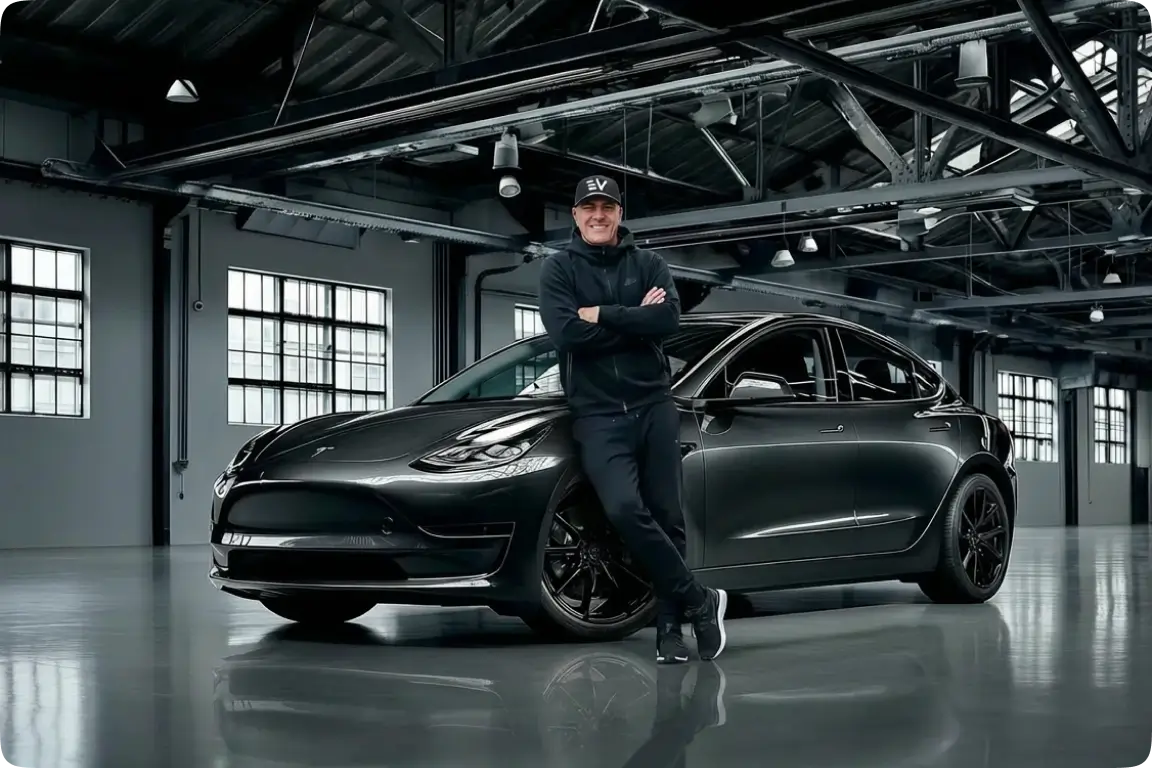
Yes. Instead of choosing an electric vehicle first and trying to force it into your budget, EV Auto lets you begin with a comfortable monthly-payment range. After considering your vehicle needs, financing inputs, and trade-in information, EV Auto can identify three EV options that realistically fit those parameters. Final payments remain subject to the selected vehicle, loan terms, taxes, trade equity, and credit approval.
This payment-first approach can make a complicated, multi-brand EV search more manageable. The important distinction is that it should be payment-first, not payment-only: monthly affordability matters, but so do the amount financed, annual percentage rate, loan length, insurance, charging, and total ownership cost.
Table of Contents
What Payment-First EV Shopping Means
Traditional vehicle shopping often begins with a make or model. The shopper falls in love with it, calculates a payment, and then tries to close an affordability gap with a larger down payment or a longer loan. Payment-first shopping reverses those steps.
You establish a realistic payment range, identify nonnegotiable vehicle requirements, and then compare EVs that can satisfy both. EV Auto can use those inputs to provide three candidate vehicles instead of asking you to search every listing individually. You can also explore available electric vehicles from multiple brands while refining your priorities.
Key principle: Use the monthly payment as a screening tool, then compare total price, APR, loan term, trade equity, range, condition, and ownership costs before signing.
How the Process Works
-
Choose a comfortable payment range. Leave room for insurance, electricity, registration, tires, and any home-charging expenses.
-
Define your vehicle needs. Consider seating, cargo space, estimated daily mileage, access to charging, all-wheel drive, towing, and preferred body style.
-
Provide financing assumptions. Down payment, desired term, and credit profile can materially affect the result.
-
Add trade-in information. EV Auto can account for the value and remaining loan balance of a gas-powered vehicle.
-
Review three matched EVs. Compare the candidates by total amount financed and real-world suitability—not payment alone.
|
Information that improves a payment-first EV match |
||
|
Input |
Why it matters |
Useful details to provide |
|---|---|---|
|
Payment range |
Sets the initial affordability boundary |
Target and absolute monthly maximum |
|
Driving needs |
Helps avoid paying for too much or too little capability |
Commute, road trips, winter driving, towing, and cargo |
|
Charging access |
Influences the range and charging speed you may need |
Home, workplace, apartment, or public charging access |
|
Financing inputs |
Changes the estimated payment |
Down payment, term, credit information, and co-buyer |
|
Trade-in |
Positive equity can reduce the amount financed |
VIN, mileage, condition, payoff amount, and loan holder |
Five Advantages of Starting With a Payment
1. Stay Within a Clearly Defined Monthly Budget
A payment ceiling helps eliminate vehicles that would require uncomfortable financing. For a stronger budget, calculate both the vehicle payment and recurring costs such as insurance, charging, parking, and tires. EV Auto’s online payment calculator can help you test different amounts, rates, and terms before narrowing the search.
2. Compare EVs Across Brands and Price Points
Starting with a brand can hide viable alternatives. Starting with affordability makes it easier to compare a pre-owned Chevrolet Bolt with vehicles from Tesla or other mainstream manufacturers—or to determine whether a Rivian or Lucid can fit with the available down payment and trade equity. Model year, trim, drivetrain, mileage, condition, and equipment can all change the price.
3. Shop With More Confidence in Complex EV Systems
EV Auto’s approach includes extensive testing of batteries, electronics, and vehicle technology. Testing can reduce uncertainty, but it is not a guarantee of future battery capacity or trouble-free ownership. Ask what was tested, whether diagnostic trouble codes were found, what warranty remains, and whether charging equipment is included. The dealership’s guide to questions to ask before buying an EV covers additional due diligence.
Shoppers should also enter the VIN in the National Highway Traffic Safety Administration recall lookup. An inspection and a recall search answer different questions, so neither replaces the other.
4. Receive Transparent Online Pricing
Transparent online pricing makes it easier to understand the starting price without surprise fees or unnecessary upsells. Before completing a purchase, review a written breakdown showing the agreed vehicle price, required taxes and registration charges, optional products, trade allowance, payoff, amount financed, APR, and term.
5. Apply a Gas-Powered Trade-In Toward the EV
You do not need to sell a gasoline vehicle separately before shopping for an EV. Positive trade equity can be applied to the purchase, reducing the amount financed and potentially the monthly payment. The key is to distinguish the vehicle’s trade value from the amount still owed on its loan.
Payment Math and Important Guardrails
A monthly payment is primarily determined by the amount financed, APR, and number of payments. A longer term may produce a lower payment while increasing total interest and keeping you in debt longer. The Consumer Financial Protection Bureau’s auto-loan resources recommend comparing loan offers and understanding each part of the transaction.
Amount financed: vehicle price plus applicable taxes, registration, approved optional products, and any prior debt being rolled in—minus the down payment, positive trade equity, and applicable rebates or credits.
|
Illustrative payments on $30,000 financed |
|||
|
APR |
Term |
Approximate payment |
Approximate total interest |
|---|---|---|---|
|
5% |
60 months |
$566 |
$3,968 |
|
7% |
60 months |
$594 |
$5,642 |
|
7% |
72 months |
$511 |
$6,827 |
|
9% |
72 months |
$541 |
$8,952 |
These rounded examples are educational, not financing offers. Actual terms depend on the transaction and lender approval. EV Auto’s EV financing information can help you prepare for that conversation.
Comparing EVs Across Brands and Price Points
The three matched vehicles should meet the same core requirements, but they do not have to come from the same segment. Use the payment as the entry point, then compare the compromises attached to each option.
|
Examples of factors to compare among payment-matched EVs |
||
|
Shopping priority |
Possible vehicles to consider |
Verify before choosing |
|---|---|---|
|
Compact, value-focused transportation |
Chevrolet Bolt or similar pre-owned compact EVs |
Range for your routine, charging speed, cargo room, and battery warranty |
|
Daily driving and road trips |
Tesla and comparable crossovers or sedans |
EPA range, charging compatibility, insurance, tires, and body style |
|
Truck, SUV, or outdoor use |
Rivian and other capable electric trucks or SUVs |
Towing configuration, payload, wheel-and-tire setup, and loaded range |
|
Premium comfort and performance |
Lucid and other luxury EVs |
Insurance, service access, equipment, warranty, and total purchase cost |
These are category examples, not claims about current inventory. Specifications and capabilities vary by model year, trim, drivetrain, software, wheel size, and equipment.
Using a Gas-Powered Trade-In
Trade equity is calculated by subtracting the current loan payoff from the trade allowance. If a gas-powered vehicle receives a $12,000 allowance and has a $7,000 payoff, it has $5,000 in positive equity that can be applied toward the EV. EV Auto’s trade-in value process can provide a starting point.
If the payoff is higher than the trade value, the vehicle has negative equity. Paying that difference separately is generally less expensive than adding it to a new loan. If it is rolled into the EV financing, it raises the amount financed and may make an otherwise affordable vehicle exceed the payment target.
What to Verify Before Choosing an EV
Use This Final Checklist
-
Compare the out-the-door price, not only the advertised price.
-
Confirm the APR, term, amount financed, payment, and total of payments.
-
Verify the exact model year, trim, drivetrain, wheels, and installed equipment.
-
Review the EPA range and charging information for that configuration.
-
Ask for available battery, electronics, and diagnostic test results.
-
Check remaining battery and vehicle warranty coverage.
-
Search the VIN for open safety recalls.
-
Obtain an insurance quote for each finalist.
-
Confirm home, workplace, or public charging plans.
-
Identify where routine and EV-specific service can be completed.
The EPA electric-vehicle label guide explains standardized range, efficiency, and charging information. EPA estimates are useful comparison tools, but actual range can change with temperature, speed, elevation, climate-control use, tires, cargo, and towing.
Drivers should also plan around where they live and travel. Cold-weather reserves, mountain routes, apartment-charging permission, and distance from qualified service can matter more than a small payment difference. Review available EV Auto service resources and confirm that the location can perform the specific work your vehicle requires.
Who Benefits Most From Payment-First Shopping?
This approach works particularly well for shoppers who are flexible about brand, want to compare new-to-them EV categories, have a trade-in, or need a firm monthly boundary. It is less useful for someone who will accept only one exact model, trim, color, or rare configuration. In that situation, the vehicle may determine the required budget rather than the other way around.
Ready to build a three-EV shortlist? Submit your payment range, vehicle requirements, and trade details through EV Auto’s vehicle request form. Financing remains subject to the final vehicle and lender approval.
Frequently Asked Questions
Can I choose an EV based on a monthly payment?
Yes. EV Auto can begin with your preferred payment range and use your driving needs, financing inputs, and trade information to identify three realistic vehicle options.
Is the target payment guaranteed?
No. A target is a shopping parameter, not a loan approval. The final payment depends on the selected vehicle, amount financed, APR, term, taxes, registration, trade equity, optional products, and approved credit.
Why not simply choose the longest loan term?
A longer term can lower the monthly payment, but it usually increases total interest and may leave you owing more than the vehicle’s value for longer. Compare both the payment and total of payments.
Can EV Auto compare a Chevrolet Bolt with a Tesla, Rivian, or Lucid?
Yes, when appropriate vehicles are available and their financing fits your inputs. The shortlist should still respect essential requirements such as seating, cargo capacity, range, charging, and towing.
Can I trade in a gasoline-powered car?
Yes. Positive equity can be applied toward the EV purchase. If the vehicle has negative equity, account for that balance before deciding whether the resulting payment is affordable.
Does a tested battery guarantee future range?
No. Testing provides useful condition information but cannot guarantee future degradation or range. Ask what measurements were taken, review warranty coverage, and evaluate the EPA estimate for the exact configuration.
What if none of the three EVs fits?
Revisit one variable at a time: vehicle age, body style, equipment, down payment, trade strategy, or payment ceiling. Do not extend the term or raise the budget automatically without reviewing the total cost.
Should I include charging and insurance in my budget?
Yes. A sustainable EV budget includes the payment plus insurance, electricity, registration, tires, parking, and any home-charger or electrical-installation cost.
Sources

Are Electric Vehicles Actually Good for Off-Road Driving?
Yes—electric vehicles can be very good off-road, especially on graded canyon roads, forest tracks, snow, sand and moderate trails. Electric…
Can You Trade In a Gas-Powered Car and Have Your EV Shipped Nationwide?
Yes. EV Auto can help customers from virtually anywhere in the country trade in a gas-powered car and have an…
What Should You Ask Before Buying an Electric Vehicle?
Before buying an electric vehicle, ask whether its real-world range covers your hardest days, where and how you will charge,…