
When Are EV Auto and Tesla V4 Superchargers Coming to Lehi, Utah?
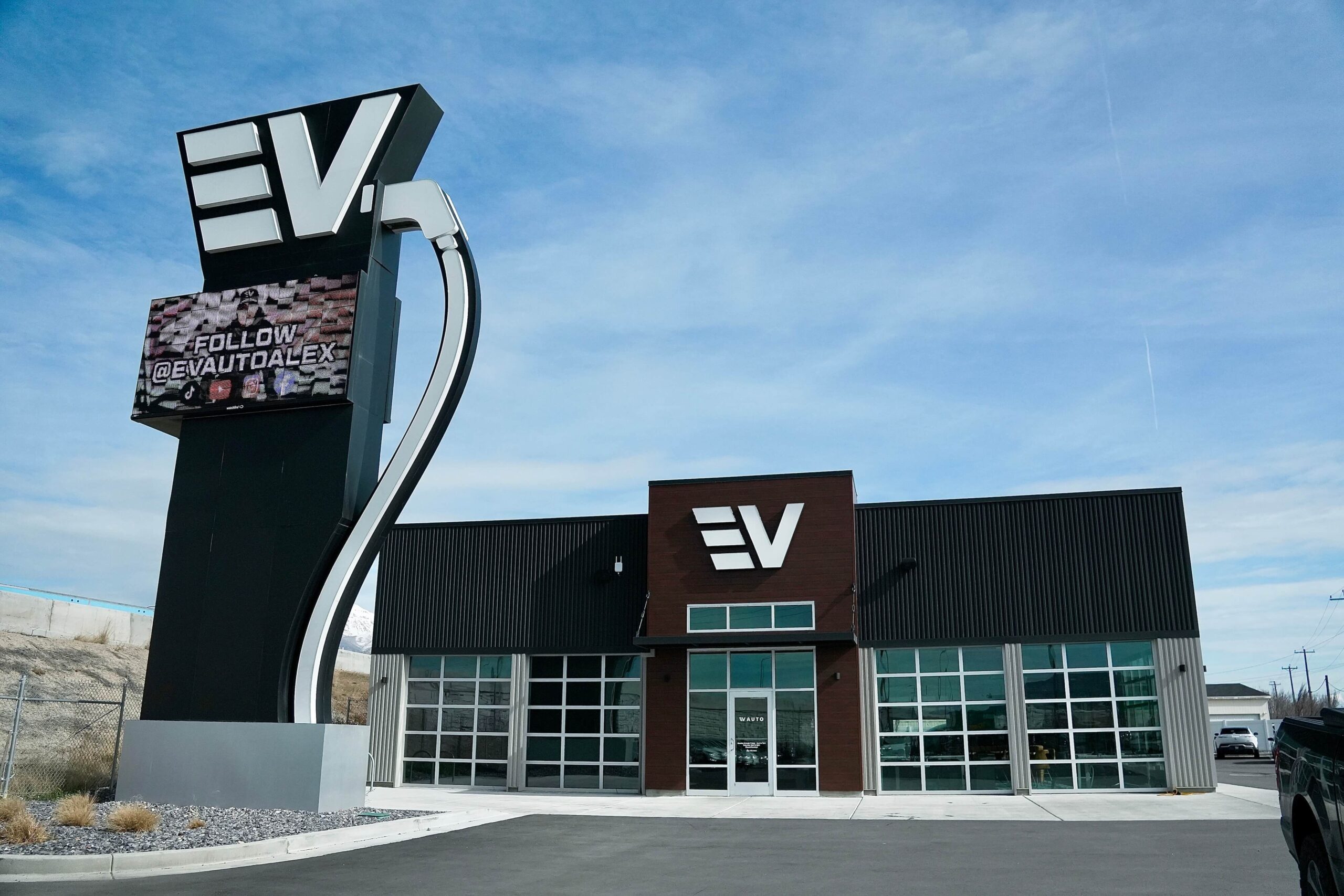
EV Auto plans to open eight Tesla V4 Supercharger stalls in Lehi before the end of the year, although no exact public opening date has been provided. The stalls are planned in two groups of four between Costa Vida and Dunkin’, near Maverik, J.Dawgs, and Café Zupas. Construction, utility work, permitting, testing, and activation can still affect the final go-live date, so drivers should verify availability before making a charging-dependent trip.
The Lehi project is part of EV Auto’s planned eight-location charging expansion across Utah. Here is what is known about the site, what “V4” does and does not guarantee, and how Tesla and non-Tesla drivers can prepare.
In this guide:
Lehi Supercharger details at a glance
|
Announced plans for the EV Auto Tesla V4 Supercharger location in Lehi, Utah |
||
|
Detail |
Announced plan |
What drivers should know |
|---|---|---|
|
Number of charging stalls |
Eight |
The stalls are planned in two groups of four. |
|
Charger generation |
Tesla V4 |
Final charging performance will depend on the completed site equipment and each vehicle’s capabilities. |
|
Location |
Between Costa Vida and Dunkin’ in Lehi |
Maverik, J.Dawgs, and Café Zupas are also nearby. |
|
Expected opening |
Before the end of the year |
No specific opening day has been announced. The year-end schedule remains a project target. |
|
Network plan |
One of eight planned Utah locations |
Six other committed communities or districts have also been identified. |
The most important distinction is between a planned station and an operating station. Drivers should not treat the Lehi site as available until it appears as active in Tesla’s vehicle navigation or app and charging sessions can begin normally.
Why the Lehi location is practical
Public fast charging is easier to use when drivers have somewhere nearby to eat, buy supplies, or take a short break. The planned position between Costa Vida and Dunkin’, with Maverik, J.Dawgs, and Café Zupas nearby, gives drivers several options while their vehicles charge.
Those nearby businesses should not be interpreted as guaranteed charging amenities. Restaurant, store, restroom, and lobby hours may differ from the charging station’s availability. Drivers arriving early, late, or on a holiday should check individual business hours separately.
Eight stalls may also provide more flexibility than a small two- or four-stall installation, but availability is never guaranteed. A stall may be occupied, temporarily unavailable, or incompatible with a particular non-Tesla EV. Keeping an alternate charging location in mind remains good trip-planning practice.
Charging courtesy: Use a charging space only while actively charging, keep the cable clear of driving paths, follow posted parking rules, and move the vehicle promptly when the session is complete. Tesla may display applicable pricing or congestion-related terms in its app or vehicle interface.
What V4 Supercharging means
“V4” refers to Tesla’s newer Supercharger equipment design. For drivers, one of its most relevant features is a charging-post layout intended to work with a broader range of vehicle charging-port positions than earlier Tesla installations.
However, the V4 label alone does not establish the exact maximum power that every vehicle will receive. A Supercharger site includes more than the visible post: power cabinets, utility service, site configuration, vehicle software, battery temperature, battery state of charge, and the vehicle’s own DC fast-charging limit all affect a session.
In practical terms, charging power is limited by the lowest applicable constraint. If a station can provide more power than a vehicle can accept, the vehicle controls the rate. Charging commonly slows as the battery fills, so charging from a lower state of charge to a moderate level is generally quicker than topping off the final portion of the battery.
The U.S. Department of Energy’s Alternative Fuels Data Center explains EV charging equipment and power levels. Tesla also provides general information about its network on the official Supercharger page.
EV Auto’s announced Lehi details do not specify the completed site’s cabinet configuration, exact peak output, pricing, or estimated charging time. Those details should be confirmed once Tesla activates the station.
Which EVs may be able to charge
Tesla has been expanding Supercharger access to some non-Tesla vehicles, but a Tesla-shaped connector does not automatically make every EV eligible to use every station. Access can depend on the automaker, vehicle model, software, adapter, market, and whether Tesla has opened that particular location to authorized non-Tesla charging.
|
General compatibility questions for the planned Lehi V4 Superchargers |
||
|
Vehicle situation |
Likely requirement |
What to verify |
|---|---|---|
|
Tesla vehicle |
Compatible Tesla charging port and an active station |
Check the vehicle navigation system for availability, routing, pricing, and any site notices. |
|
Non-Tesla EV with native NACS-style port |
Automaker and Tesla network authorization may still be required |
Confirm support for the vehicle’s model year and the specific Supercharger location. |
|
CCS-equipped EV with an approved adapter |
Manufacturer-supported adapter, eligible vehicle, and eligible station |
Follow the automaker’s instructions and confirm access through Tesla’s supported process. |
|
CCS-equipped EV without approved access |
May not be able to charge |
Do not assume that a third-party adapter makes the vehicle or station compatible. |
Tesla’s guidance for Supercharging non-Tesla vehicles explains how supported drivers can find eligible sites and start a session. Tesla also publishes background information about the North American Charging Standard connector.
Adapter safety: Use only an adapter approved for your exact vehicle and charging use. Follow the vehicle manufacturer’s instructions, inspect the connector and adapter for damage, and never force a plug into a charging port. An adapter that works for AC charging may not support DC fast charging.
How to prepare for the station’s opening
-
Wait for active-station confirmation. Construction activity or installed charging posts do not necessarily mean a station is ready for public use.
-
Check Tesla’s map, app, or in-vehicle navigation. Confirm that the Lehi location is online and available to your vehicle.
-
Verify non-Tesla eligibility. If applicable, confirm that your vehicle, model year, software, account, and adapter are supported.
-
Set up payment before traveling. Review the charging provider’s current account and payment requirements rather than trying to resolve them at a busy station.
-
Route to the charger through the vehicle’s navigation system. On vehicles that support it, this may help prepare the battery for DC fast charging.
-
Check the cable before connecting. Do not use visibly damaged equipment. Report problems through the charging provider’s designated support channel.
-
Keep an alternative station available. The federal Alternative Fueling Station Locator can help drivers identify other public charging options.
Winter temperatures can reduce charging speed until a battery reaches an appropriate operating temperature. Trip planning and battery preconditioning, where supported, can help, but the exact behavior differs by vehicle. Consult the owner’s manual for model-specific instructions.
EV Auto’s broader Utah charging plan
The Lehi station is part of EV Auto’s plan for eight Utah charging locations. In addition to Lehi, the committed locations named so far are:
-
Brigham City
-
Layton
-
Daybreak
-
Saratoga Springs
-
Sugar House
-
Spanish Fork
Those six areas plus Lehi account for seven named locations. The eighth location has not been identified in the project details summarized here. EV Auto also expects to announce more locations along the Wasatch Front and Wasatch Back, but expected opening dates, stall counts, and final site configurations have not been provided for those future announcements.
Drivers should therefore evaluate each project separately. A committed site is not necessarily under construction, and one location’s equipment or opening schedule should not be assumed to apply to another. EV Auto’s locations page and contact options are available for company information and future updates.
How the network could affect EV ownership
Additional fast-charging locations can make regional trips more flexible, particularly for drivers who travel between northern and southern Wasatch Front communities. They can also provide another option when a usual station is busy or unavailable.
Public fast charging is not a complete substitute for a practical everyday charging plan, however. Drivers with reliable home or workplace charging will often use public fast chargers mainly for longer trips. Apartment residents, street parkers, rideshare drivers, and people who drive unusually high daily mileage may depend on public infrastructure more heavily.
Before buying an EV, evaluate more than its advertised range. Important considerations include:
-
Where and how often the vehicle can charge at home or work
-
The connector installed on the specific model year
-
Access to Tesla Superchargers and other DC fast-charging networks
-
Whether an approved adapter is required
-
The vehicle’s actual DC fast-charging capability and charging curve
-
Cold-weather range and charging behavior
-
Typical daily mileage and regular long-distance routes
For a broader purchase checklist, read what to ask before buying an electric vehicle. Connector support and charging access can vary by model year, even when two vehicles share the same model name.
Get help choosing an EV for Utah travel
If the planned Lehi V4 Superchargers could change how you commute or travel, compare vehicles based on the charging setup you will actually use. EV Auto can help you review connector type, available adapters, estimated driving needs, and other vehicle-specific considerations.
You can browse EV Auto’s available vehicles or contact the EV Auto service team in Lehi with service-related questions. Always confirm charging compatibility for the exact vehicle, model year, and equipment before purchasing an EV around access to a particular network.
Frequently asked questions
When will the Tesla V4 Superchargers in Lehi open?
EV Auto expects the station to open before the end of the year. No exact public opening date has been announced, and the schedule may be affected by construction, permitting, utility, inspection, testing, or activation requirements.
Are the Lehi Superchargers open now?
The location should be treated as planned until Tesla shows it as operational and drivers can start charging sessions. Installed equipment does not necessarily mean a station is open.
How many V4 Superchargers are planned for Lehi?
Eight charging stalls are planned, arranged in two groups of four.
Where will the Lehi charging station be located?
The announced location is between Costa Vida and Dunkin’ in Lehi, with Maverik, J.Dawgs, and Café Zupas nearby. A precise street address was not included in the project details summarized here.
Can non-Tesla electric vehicles use the new station?
Possibly, but access should not be assumed. Compatibility depends on whether Tesla opens the site to non-Tesla vehicles, whether the automaker supports Supercharger access, and whether the vehicle has the correct native port or an approved DC fast-charging adapter.
How fast will the Lehi V4 chargers be?
No precise site-specific maximum has been announced. Actual charging power will depend on the completed station hardware, the vehicle’s charging limit, battery temperature, state of charge, and other conditions.
What other Utah charging locations has EV Auto committed to?
EV Auto has named Brigham City, Layton, Daybreak, Saratoga Springs, Sugar House, and Spanish Fork in addition to Lehi. The company’s plan calls for eight Utah locations, leaving one planned location unnamed in the details currently available.
Will I still need home charging?
That depends on your driving and housing situation, but home or workplace charging is often the most convenient everyday option. Public DC fast charging is especially useful for longer trips, high-mileage days, and drivers who cannot install a charger where they live.
Sources
Can You Shop for an Electric Vehicle Based on Your Monthly Payment?
Yes. Instead of choosing an electric vehicle first and trying to force it into your budget, EV Auto lets you…
Are Electric Vehicles Actually Good for Off-Road Driving?
Yes—electric vehicles can be very good off-road, especially on graded canyon roads, forest tracks, snow, sand and moderate trails. Electric…
Can You Trade In a Gas-Powered Car and Have Your EV Shipped Nationwide?
Yes. EV Auto can help customers from virtually anywhere in the country trade in a gas-powered car and have an…